Wu Jie serves as practice mentor at the Business School of China University of Political Science and Law and as an adjunct lecturer, teaching undergraduate and graduate courses.
Her courses include Public Interest Law, Blockchain and the Digital Economy, and Criminal Defense Practice, integrating first-hand experience from major duty-related crime, death penalty review and economic crime cases into the classroom.
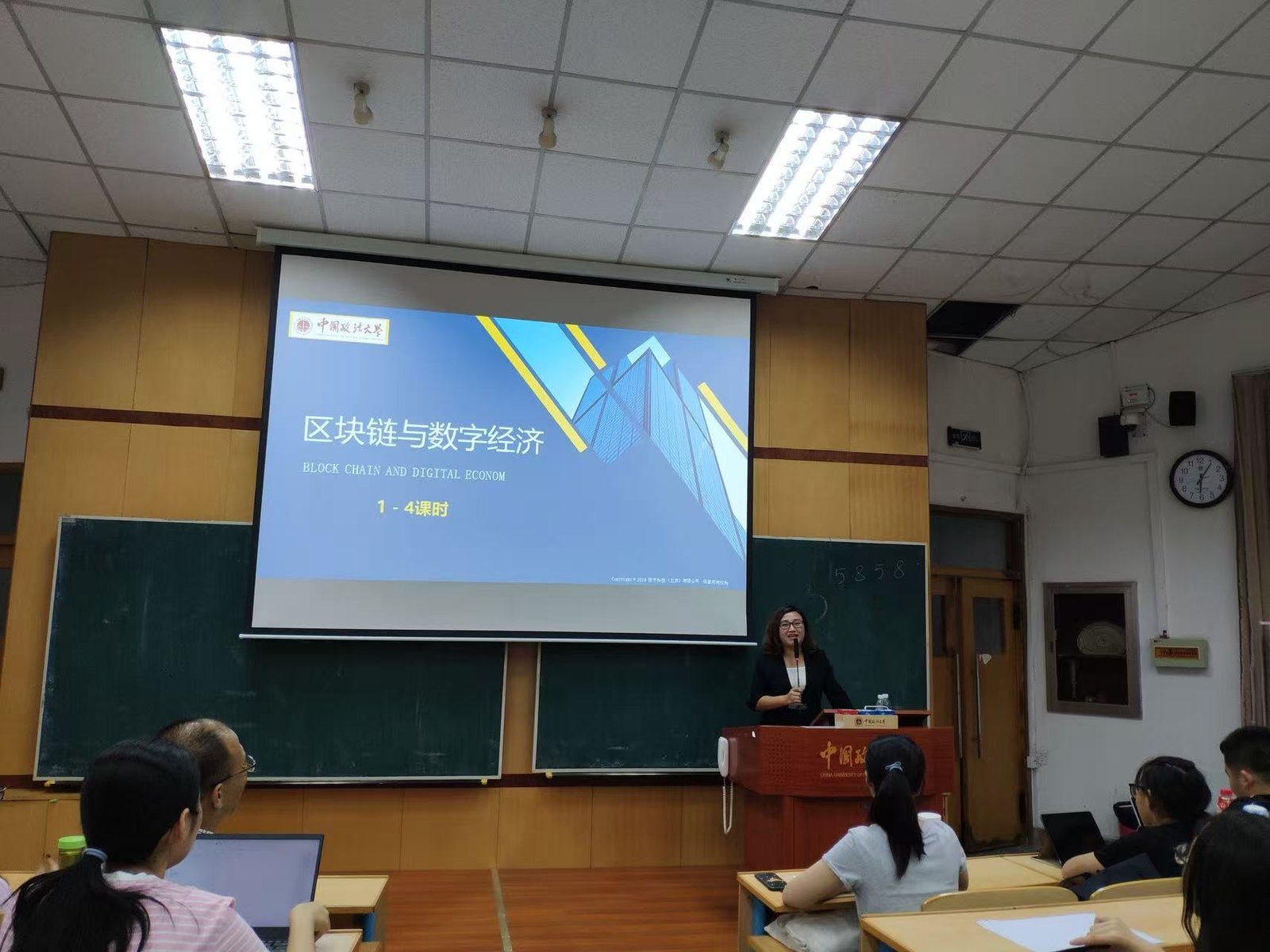
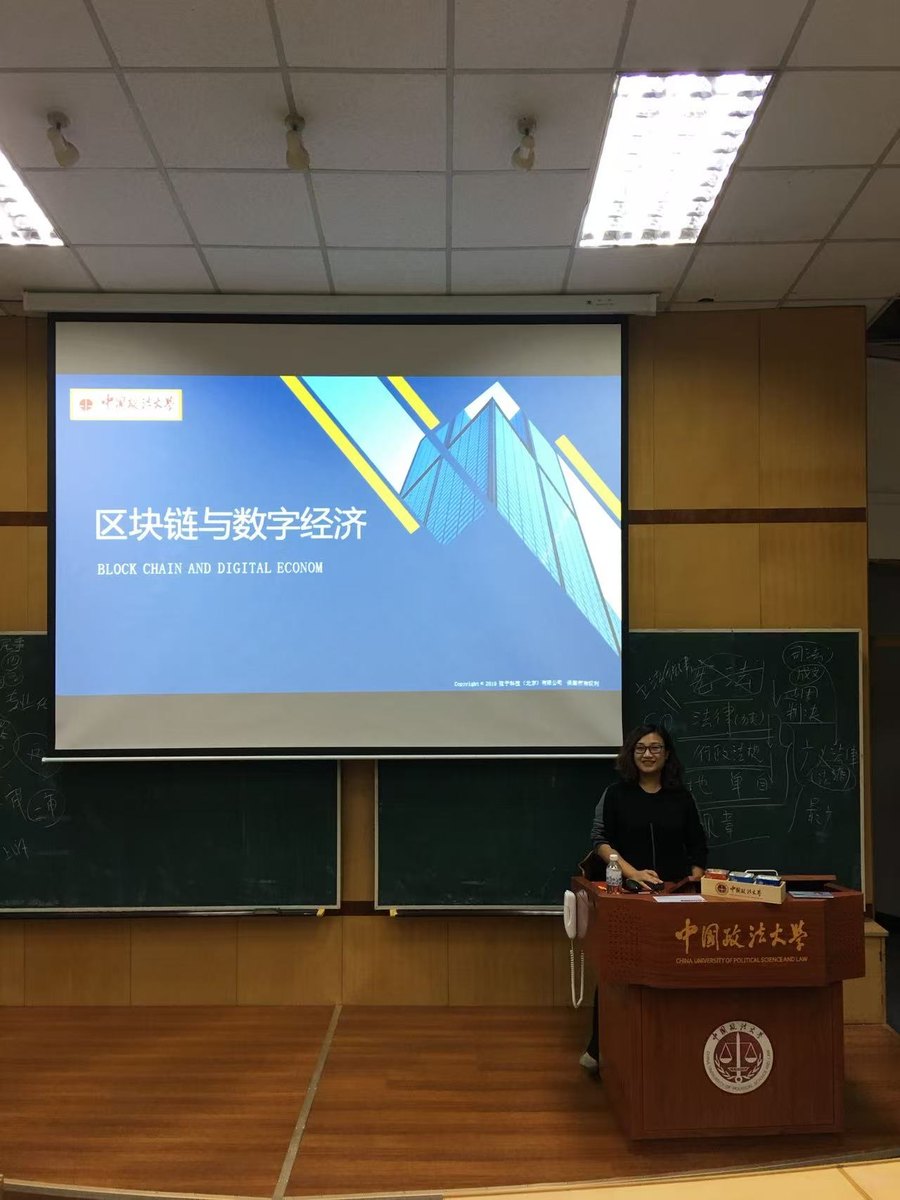
These photographs show Wu Jie teaching “Blockchain and the Digital Economy,” an interdisciplinary course covering the fundamentals of blockchain technology, the legal effect of smart contracts, the regulatory framework for digital currencies and data compliance. Using slides that set technical architecture against legal rules, and a blackboard to map out the legal relationships and responsible parties in decentralised transactions, she works through recent cases on digital-currency fraud and the validity of mining contracts — joining technical logic to legal analysis so that students can see where the law applies in emerging sectors.

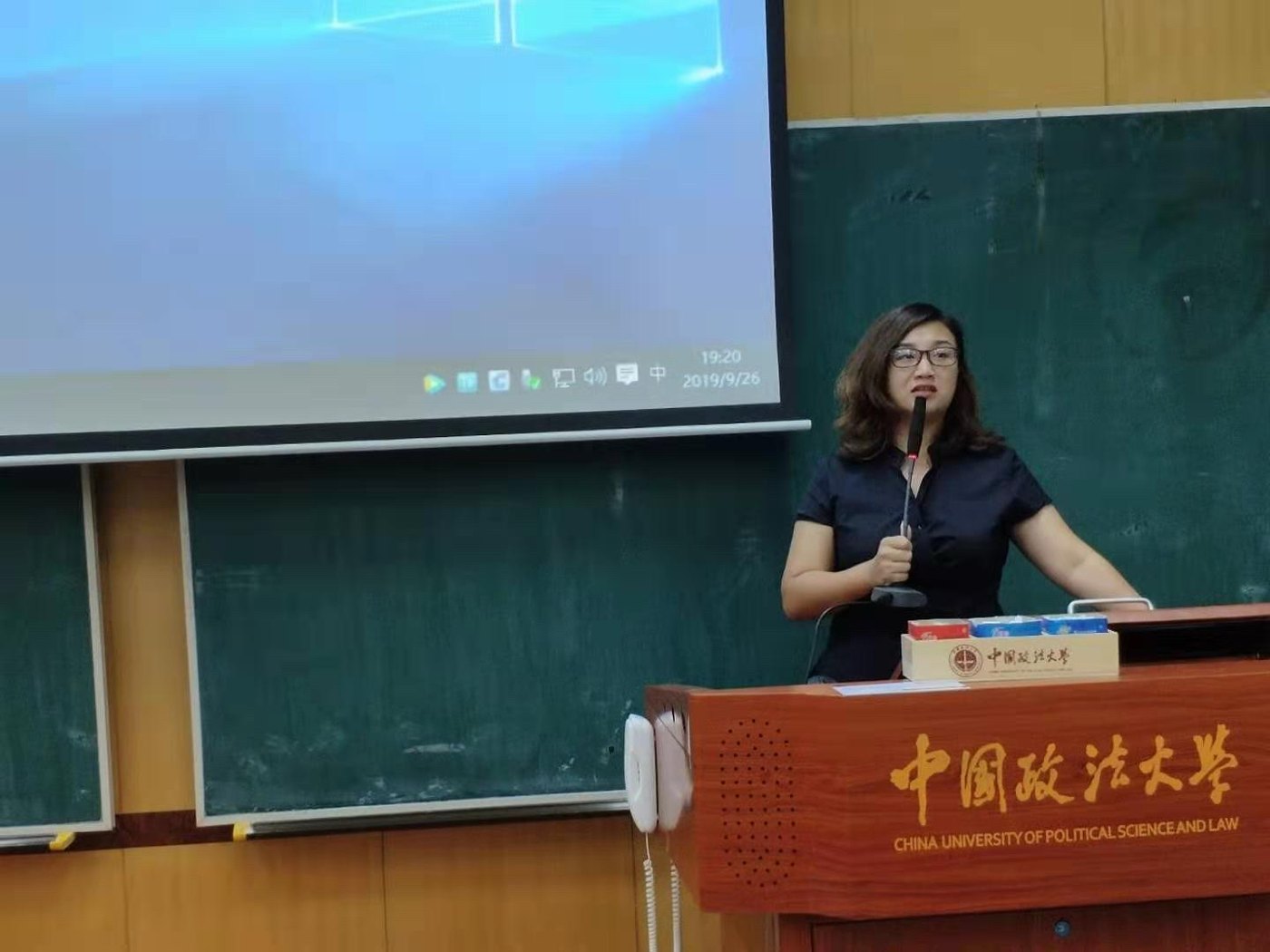
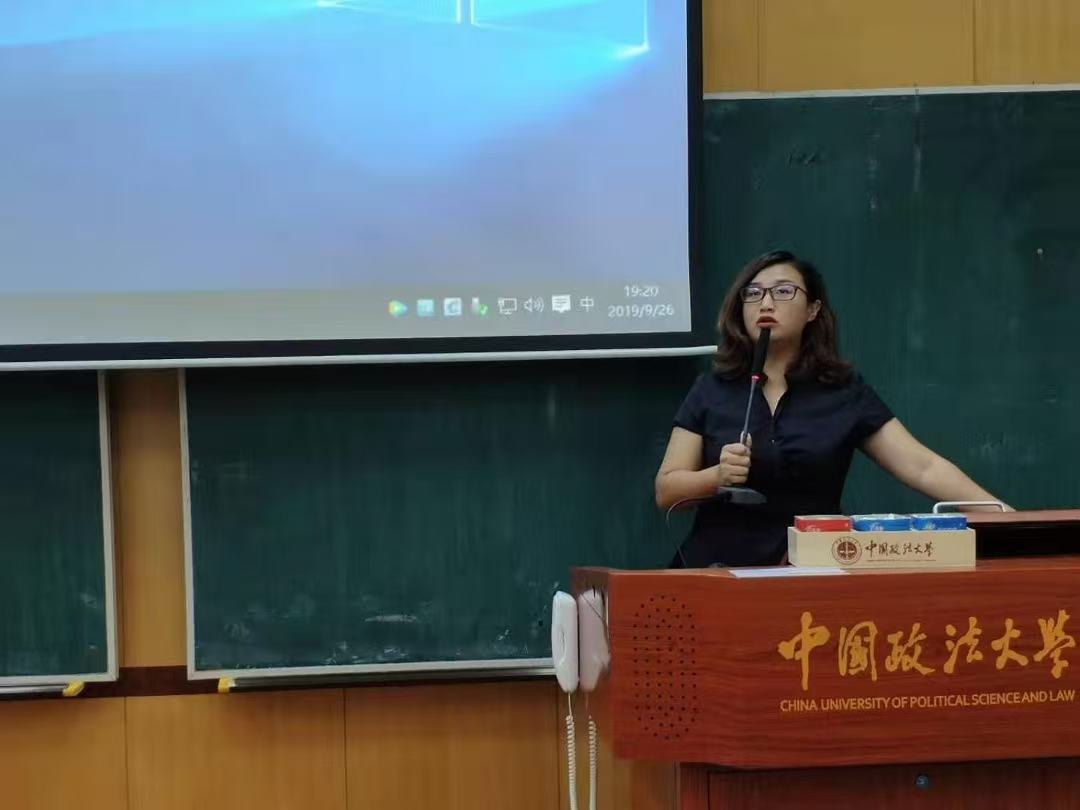
These photographs record a case discussion led by Wu Jie in a theory class. Working from a real case, adapted, that turns on the line between robbery and extortion, she first sets out the core facts and then raises the contested questions one by one — whether the victim was under psychological compulsion, whether the disposition of property was driven by fear — comparing them against the reasoning in guiding cases of the Supreme People’s Court, so that students learn to argue from facts to legal rules.

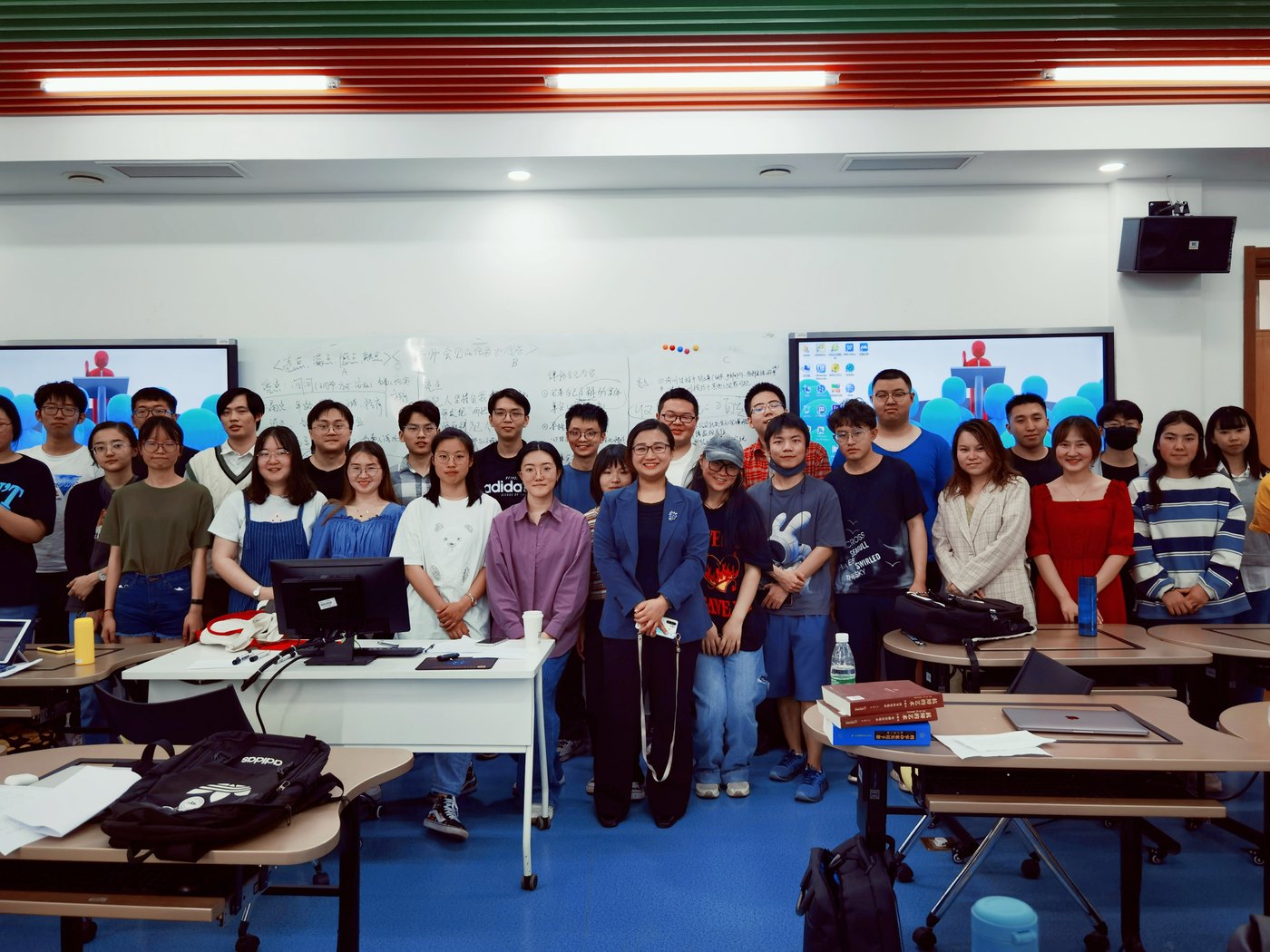

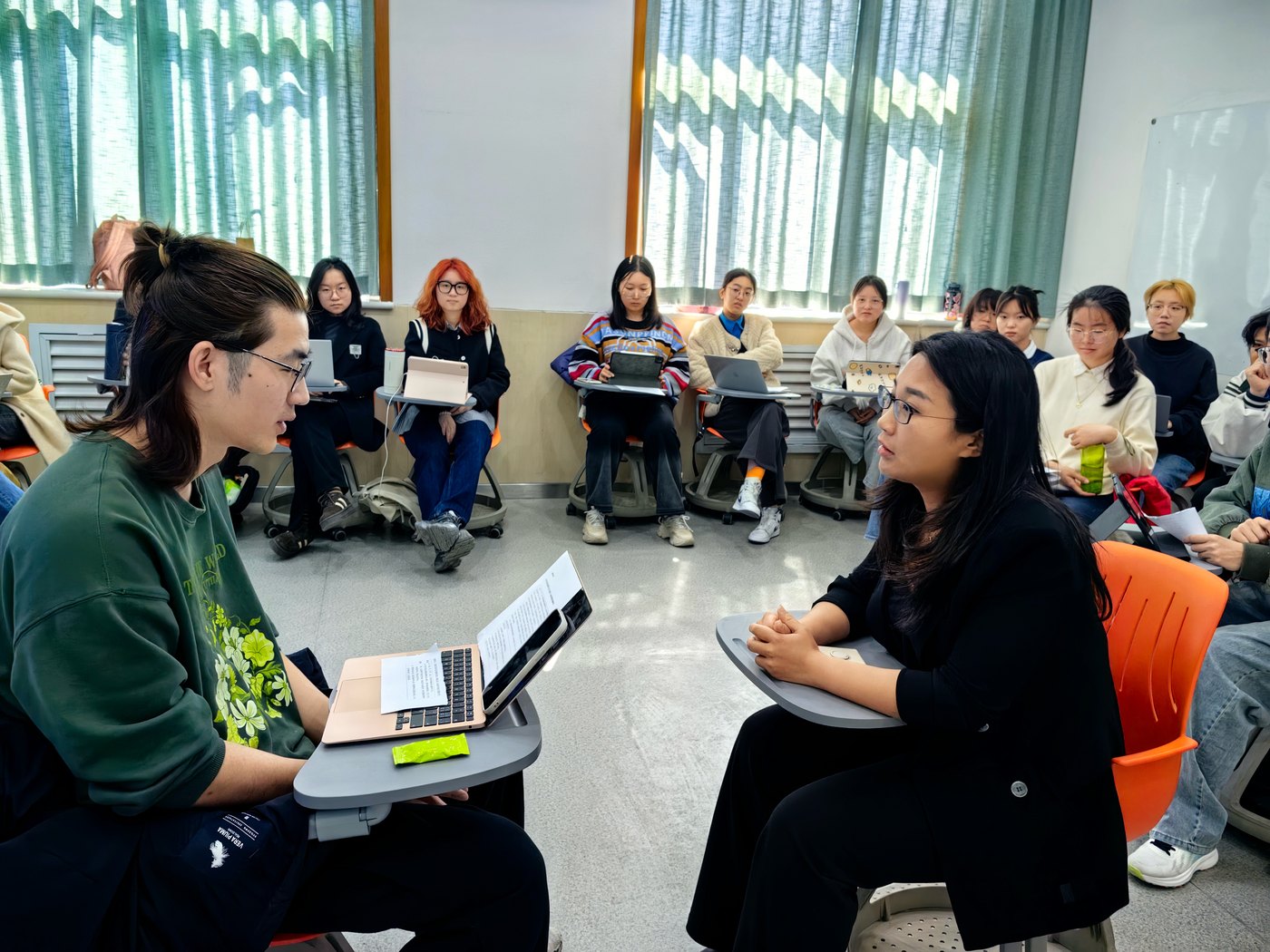
These photographs show Wu Jie guiding defense strategy in a small-group seminar. Using the file of a case involving intentional injury causing death, she goes through it page by page, flagging problems that may arise in the investigation stage — the procedural validity of expert opinions, the plausibility of the timing of confessions — and sets out several defense paths for contested points such as whether causation was broken and whether the victim was at fault. She then compares the viability of each approach, drawing out how details found in the file translate into the outcome of a defense.